
The Spinorwind Turbine is a hybrid drag-lift design inspired by the paddle sequence of a sculler or swimmer.

Like a swimmer, during the power stroke the turbine’s blades are perpendicular to the wind, maximizing the blade’s cross-section and thus ability to extract energy. Unlike a conventional three-bladed wind turbine which depends on aerodynamic lift to push on the blade, drag is effective even in turbulent conditions, or when the wind speed varies in time and with height above the ground.
On the return stroke the blades are parallel to the wind (water), thus minimizing upstream drag losses. The difference between up and downstream drag determines net power generation.
In this animation wind is moving parallel to the tail vane. The blue side of the vane is flat, while the red side is an airfoil, which adds lift as well as drag during part of the rotary cycle when it is moving in direction of the wind. The tip speed ratio is also greater than 1 — another indication of higher efficiency. However, with two blades the upstream side of the cycle does not extract energy from half of the turbine’s swept area, reducing efficiency. Thus four blades maybe preferred.
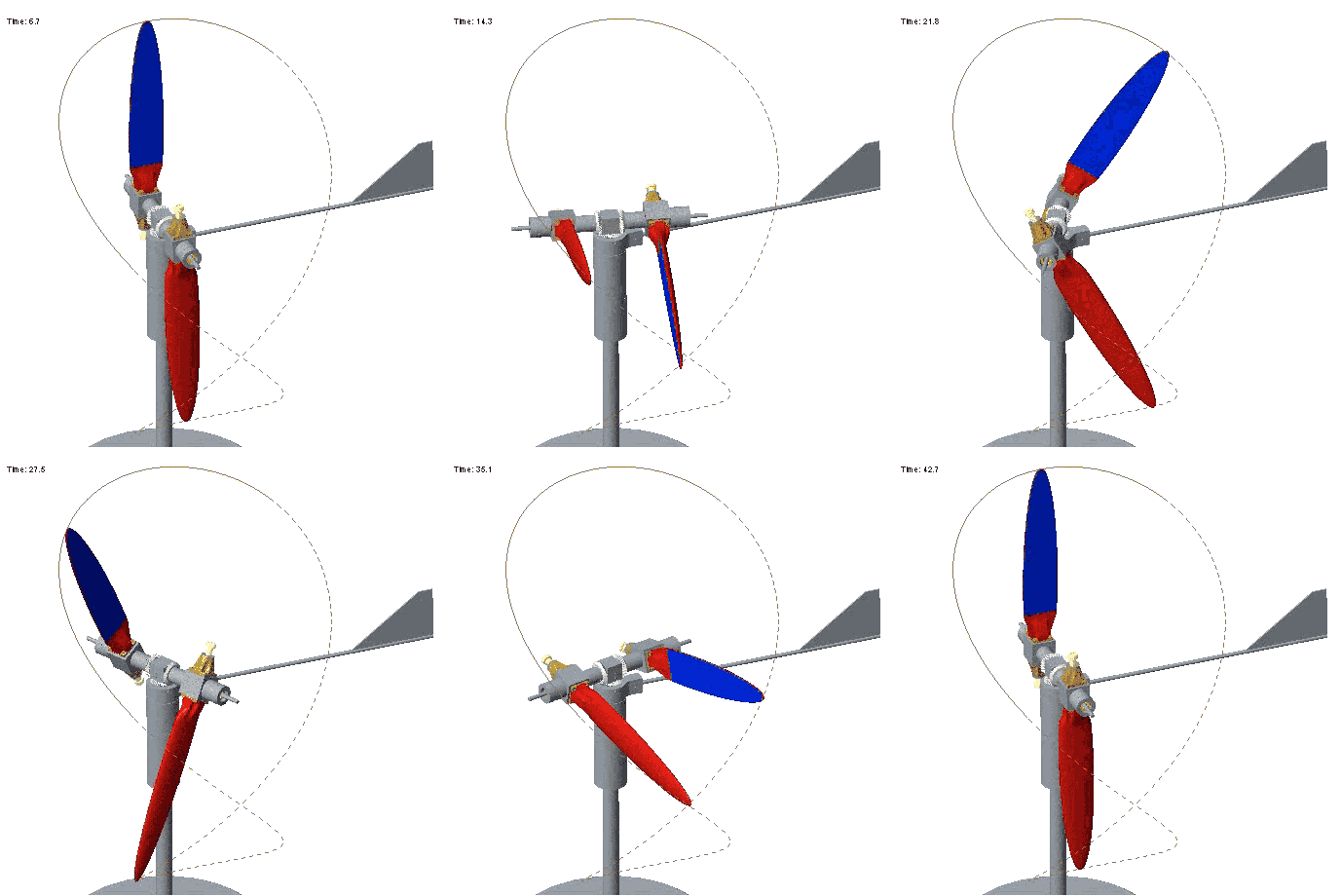
To achieve this sculling motion, a simple gear arrangement, much like a car differential, is employed. The tip of the blades (see the videos above) follow a “figure 8” (note how the green figure 8 in Spinorwind’s logo traces the tip’s motion along a complete cycle).

We discovered, in the course of patenting the concept, that a similar idea dates back to 1918. Liles describes a pure drag, low aspect-ratio blade configuration:


The key to wind turbine commercial success (where “fuel” cost is free) is an efficient and reliable power train with low vibration and long lifespan. Thus maximizing return on capital. Typical drag turbines are heavy and compact and do not intercept a large area of windflow. They do not scale to high energy production at low cost.
Our approach utilizes narrow blades with a variation on the three-bladed conventional gear box attachment. This arrangement provides for less turbulence, greater vibration resistance, and lower cost that simple drag devices.
For example, this two bladed design with each blade oriented at 90 degrees to each other:

Or this quad-blade approach:
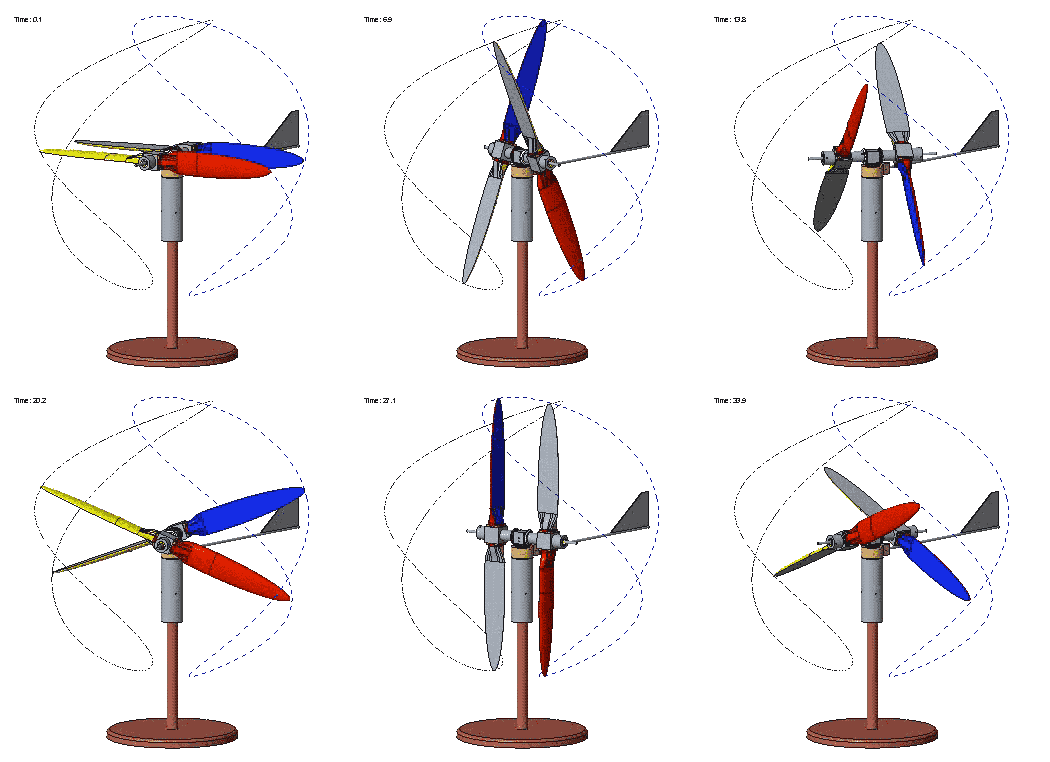
Our initial proof-of-concept designs were constructed out of K’nex parts and a foam core blade! Remarkably, they functioned quite well, and guided us to build a 6 foot metal prototype with honeycomb aluminum blades clad in foam and fiberglass airfoils. Initial efficiency and vibration tests are promising and ongoing. The key technical challenges are stress and wear. Compared to a conventional three-bladed wind turbine, the Spinorwind’s blade velocity and orientation vary within a cycle, requiring the bearings to handle both thrust and off-axis motion.
For more details, see our patent US 747070 Blonder or contact us at the tab above.